Welcome to the Manchester Airport Noise Information Portal
This portal aims to provide interactive information about flights to and from Manchester Airport and how they may impact the local community. The portal is structured around the questions we commonly get asked, with location-specific statistics presented to help provide answers. You can enter an address or select a spot on the map to tailor this data, alternatively you can browse the portal without entering your location using the default location option, however only general information will be presented.
Please select one of the white buttons below to see information tailored to your location:
The aviation industry has seen progressive improvements in aircraft design and operational procedures. The benefits of these improvements can be seen in our annual noise contours.
The following maps shows how our summer noise contours (57dB LAeq day and night) have varied over time. An LAeq Contour is a measure of average noise at a stated level (in this case 57dB) over a given time period which is the summer 92 days between 16th June and 15th September. The ‘day’ refers to the 16 hour time period between 07:00 and 23:00. The ‘night’ refers to 23:00-07:00. Over this period, the number of aircraft movements have also changed. In particular, due to the Covid-19 Pandemic, daytime operations largely ceased. This accounts for the reduction in contour size in 2020 and 2021.
The following map shows the most recent day and night noise contour, produced independently by CAAs Environmental Research and Consultancy Department (ERCD) , which is modelled using their ANCON software. Using the slider on the map, the various contours can be viewed.
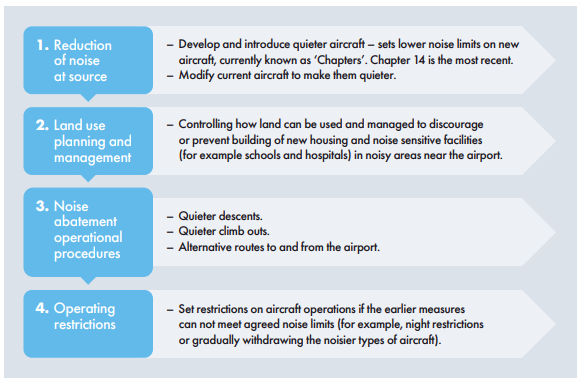
The International Civil Aviation Organisation (ICAO) has developed the concept of a ”balanced approach” to aircraft noise management. This approach incorporates four key elements to the mitigation of noise levels at airports, which has been endorsed under the EU Directive 598/2014. This aligns with the UK Government policy on aviation noise, which can be found here.
Reducing noise at source: Reduce the noise produced by the aircraft itself through continual design and engineering improvements. Over the past 30 years efforts in this category have led to dramatic reductions in aircraft noise where newer aircraft are much quieter than their predecessors.
Land-use planning and management: Support local and national Governments to manage land use around airports and under flight paths to limit the number of new residential properties built in areas exposed to aircraft noise.
Noise abatement operating procedures: Encourage aircraft operators to fly their aircraft in the optimal low-noise configuration and work with air traffic control (ATC) to enable that configuration.
Operating restrictions: Banning or limiting operations, this is the most difficult part of the balanced approach to implement as it has to align and operate within other Governmental restrictions.
How Manchester Airport manages noise
Knowing where aircraft fly and how well they are complying with airport noise mitigation rules helps everyone to improve operations and keep the noise exposure to the absolute minimum. The airport is acknowledged as a noisy place, but steps can be taken to abate that noise as much as possible. Our noise strategy can be viewed here.
Reducing noise at source: Encouraging airlines to operate modern, low noise aircraft.
We currently operate a noisy aircraft penalty scheme which penalises aircraft which exceed published noise limits, as shown in the table below:
Period Name
Time
Noise Limit
Night
23:30-06:00
81 dB
Shoulder
23:00-23:30 & 06:00-07:00
82 dB
Day
07:00-23:00
90 dB
Money raised from noisy aircraft penalties is donated to the Manchester Airport Community Fund.
Land-use planning and management: Regularly produce noise contours for use by Government Authorities to manage the planning process. These contours show the typical noise exposure for an average day over the year.
The noise impact of the Airport’s operation is outlined in Section 106 planning agreement and states that noise shall be measured on an annual basis against the agreed NAP metrics, but shall in any event, not exceed the terms of:
The average maximum noise level of the noisiest 10% of departing air traffic movements, which was 89.2dB(A) in 1992.
The modelled area of the standardised average mode 60dBLAeq 16-hour (0700-2300) 92-day summer noise contour, which was 33.6km2 in 1992.
The modelled area of the standardised average mode 60dBLAeq 8-hour
Noise abatement operating procedures: Encourage aircraft operators to fly their aircraft in the optimal low-noise configuration and where appropriate monitoring compliance against these procedures with data reported as part of our regular reports.
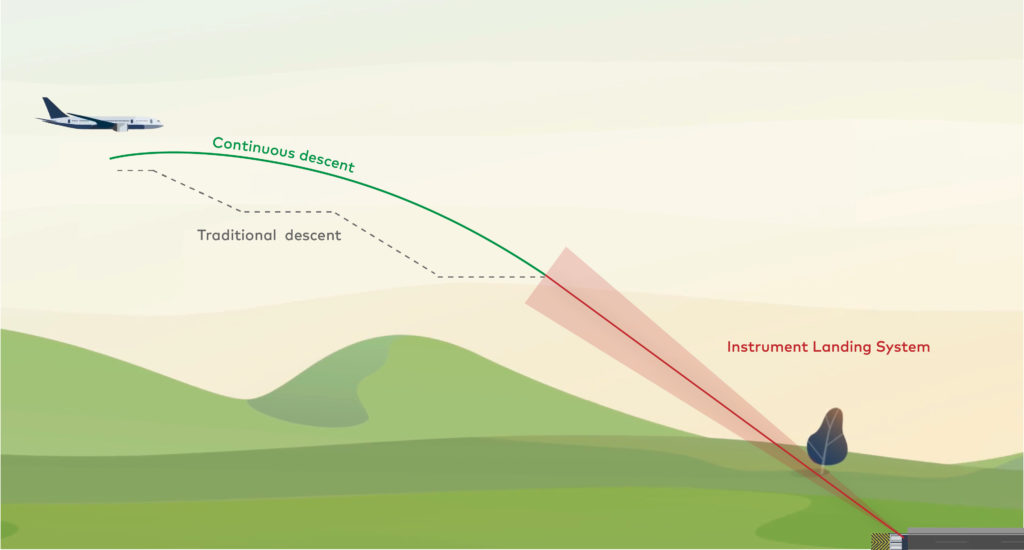
We have a target that 90% of arriving aircraft will perform a Continuous Descent Approach (CDA).
Continue to promote the use of reduced engine taxi at the airport where it is practical and beneficial to do so.
Continue to promote and report figures for: Continuous climb departures (CCDs) enable aircraft to keep climbing after take-off until they reach their cruise altitude. Continuous climbs can increase the height of the aircraft closer to the airport and make noise levels less audible.
Continue to promote and report figures for: Track Keeping Performance. A noise preferential route (NPR) is one that directs an aircraft along an agreed route to avoid areas of population.
Operating restrictions: Where appropriate, the airport tracks compliance against the restrictions, which include night flight restrictions with compliance reported as part of our regular reports.
Manchester Airport enforces restrictions to reduce noise pollution, particularly during the night (23:00-07:00). Aircraft with a QC8 or QC16 rating are prohibited during these hours due to their high noise levels. Additionally, there is a scheduling ban on QC4 aircraft during the core night (23:30-06:00) as part of the Noise Action Plan. Furthermore, the possibility of implementing a scheduling ban for quieter QC2 aircraft is being explored to further minimize noise disruption.
The Airport’s Noise and Operations Monitoring System (ANOMS) is configured to analyse compliance with all of these procedures, providing data and analytics to airport staff. This data can be extremely useful to determine trends, identify non-compliant performance, and could inform future planning such as to engage directly with the airline to improve overall performance.
An example of a Continuous Descent Approach:
Below is a video which explains the Continuous Descent Approach procedure:
Airspace is a three-dimensional piece of sky in which aircraft fly and it forms a critical part of the national infrastructure. Like the road and rail network, it plays a vital role in facilitating the movement of people and products quickly, safely and efficiently, enabling connectivity and driving economic growth. Although the UK has some of the most congested and complex airspace in the world, the way it is managed has changed little since the 1950s.
The Future Airspace Programme at Manchester Airport forms part of the Civil Aviation Authority’s (CAA’s) wider Airspace Modernisation Strategy (AMS). Modernising UK airspace has the potential to bring several benefits, including reduced delays, greater reliability, more efficient operations, and the chance to build on the UK’s already world-class aviation safety record. In addition, it presents an opportunity to address some of the wider impacts of aviation such as noise and emissions.
You can find out more about our airspace change programme here.
Drones
Drones are a new challenge and present a large risk to aircraft as if a drone was to collide with an aircraft it could result in a severe accident. As a result drone operators should take extreme care when flying their drone and avoid operating near airports completely. The restrictions on flying drones near airports and airfields are legal requirements and enforced by UK aviation law. To obtain permission to fly a drone within the zone surrounding Manchester Airport, a request should be made by emailing https://www.manchesterairport.co.uk/aviationprofessionals/drones/ or https://nsf.nats.aero/drones-and-model-aircraft/ and we will get in touch with you as soon as possible to discuss details of your application.
We are proud of the role Manchester Airport plays as a catalyst for the national and regional economy, helping drive tourism and cargo as well as and supporting jobs and business opportunities.
Working with our neighbours, local communities, colleagues, customers and on-site businesses is an important part of our approach to noise management. We have a long-term commitment to make a positive difference to the quality of life in our local community. As part this commitment, we are dedicated to building and sustaining a positive dialogue with our neighbours: informing, involving, consulting and reporting back to them. These groups include:
Manchester Airport Parish Engagement Forum. If you would like your local parish council to be represented on the Parish Forum please email community@manairport.co.uk
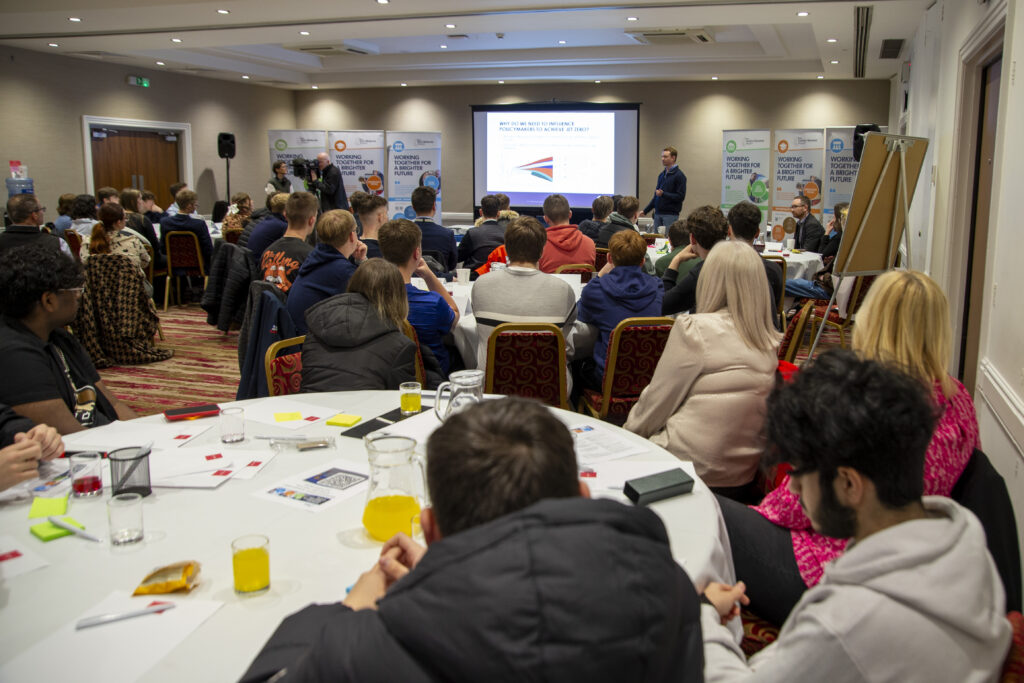
We regularly arrange and attend community outreach sessions where members of the public can come and talk to us about any issues or concerns they may have. These face-to-face outreach sessions take place each year in villages near to the airport. The events we will be attending are promoted on our website- here Community Outreach Events | Manchester Airport as well as social media channels. Our attendance at events is also shared by stakeholders in the community.
You can find our latest Community Flyer issues here-Community | Manchester Airport and you can sign up to receive our quarterly Community Flyer directly to your email address here.
Additional community engagement is undertaken through:
Community survey
Website material, including the WebTrak Flight tracking system
A key part of our engagement program is this portal, which seeks to share information on our past and current operations transparently with the public. It is designed to be tailored to your local area to present detailed, localised information, as well as outline programs that engage and collaborate with the public on wider topics in their area.
How can you get involved?
You can get involved in a number of ways:
Noise enquiries and complaints, If you were disturbed by a specific flight you can investigate this using the tools on this portal and by using our online flight tracking tool. You can also use this tool to submit an enquiry or complaint to us, we’ll investigate your complaint and respond in due course. Navigate to the ‘Contacting the Airport about noise’ page under the ‘Additional Information and FAQs’ heading for more information.
Frequently Asked questions, we assembled our most common questions into a list available on this portal.
Environmental management and reporting is essential for sustainable airport operations. This allows the airport to understand its impact on the local environment and communities, and what can be done to manage and mitigate those potential impacts.
The system Manchester Airport uses is called ANOMS, which stands for Airport Noise and Operations Monitoring System. It is a complex solution featuring both hardware in the form of remote sensors, radar data collectors as well as advanced analytical tools.
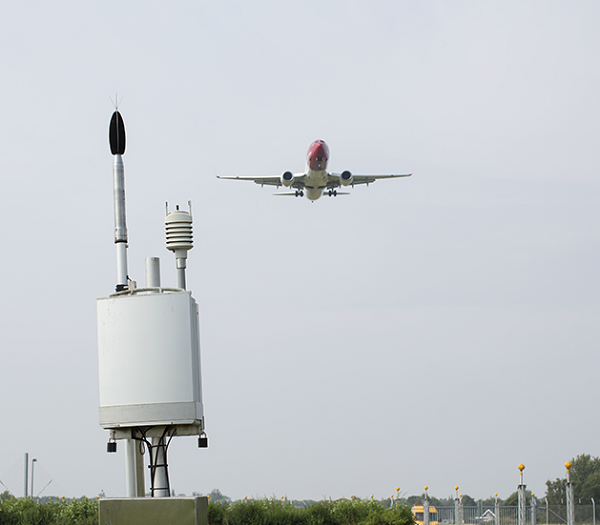
ANOMS uses a number of fixed or temporary noise monitors in the local area, these are generally located under or near flight paths. The monitors detect and record the noise levels 24 hours a day, 7 days a week to a central system.
You can find out more by watching this video:
Data collection and noise event detection
The system combines data from remote noise monitors deployed in the local community and in proximity to runways and flight paths. These run 24 hours a day 7 days a week, continuously collecting and sending noise data through to ANOMS, creating ‘noise events’ when the noise level rises above the background noise level and meets pre-set thresholds.
Flights are tracked using data direct from Air Traffic Control (ATC) radar systems, in effect it is the same data used by ATC to safety control aircraft in the sky. ANOMS uses this data to record the path flown by the aircraft and by identifying which noise monitors the aircraft flew close to and when. ANOMS then identifies which aircraft generated each of the noise events.
The process is complex and whilst it can identify noise events due to aircraft it can also identify events that were not generated by aircraft. These are known as community events and could be generated by birds, wind, vehicles on a road or even emergency vehicle sirens. In effect, any noise that we could hear on a day-to-day basis that isn’t generated by an aircraft.
By considering the aircraft and community noise, a detailed picture of the local soundscape can be built, allowing the airport to understand the potential impact of operations in the local community.
How the system is used
The ANOMS system is used by different stakeholders in the airport management structure:
Our Flight Evaluation Unit team can view enquiries, complaints and submissions from the local community. Accessing the detailed data available within ANOMS to respond to the local community. This includes detailed weather and operational data to explore and analyse unusual operations.
Operations teams can use the detailed reports to assess and continuously improve the airport.
Management can assess trends, determine performance and provide direction.
In summary, the system allows us to quickly identify and analyse anything anomalous, and also monitor the day to day operations of the airport, presenting reports to aviation stakeholders and the community. The historical data can then be used to plan for the future and improve operations, where possible.
The Airport Noise Monitoring and Management System (ANOMS) is operational 24 hours a day, 7 days a week, continuously tracking and recording aircraft flights to and from the airport.
The system uses data collected from air traffic control radar systems and airport data feeds to build a detailed picture of these flights. All of the collected data is analysed and presented the report presented below. The dashboard is automatically updated every month and you can access data from previous months using the drop-down in the top right corner.
The report shows the number of arrivals and departures per day and per runway across the top of the report, with additional data available in the various subpages.
The data shown in the dashboard below is not specific to your location. The data relates to Manchester Airport operations as a whole.
Procedure Compliance: outlines how the airport, airlines and specific aircraft are performing against the guidelines and rules set by the airport.
Period: provides a deep-dive into the numbers of arrivals and departures using the airport per day and per hour.
Category: summarizes the number of flights at the airport for each airline and aircraft type.
Trend: outlines how the number of arrival and departures per hour compare in the selected month to the past 6 months.
A comprehensive list of aircraft types can be found here.
The Manchester Airport Sound Insulation Scheme (SIGS) is designed to help the people who are affected most by noise from aircraft and the airport. The scheme has helped many homeowners close to the airport to improve the sound insulation of their homes.
The Scheme boundary is based on a ‘noise contour’ that identifies the area most affected by aircraft noise. As aircraft have become quieter the number of people affected and the Boundary has reduced. Today there are over 3,000 domestic properties within the current boundary of the Sound Insulation Grant Scheme.