Unusual Operations
From time to time you may notice an unusual aircraft operation at or around the airport. Below are a number of examples of unusual operations that you may see at Manchester Airport.
Go-arounds or missed approaches
A go-around, or missed approach, can occur for many reasons such as, an obstruction on the runway preventing the aircraft from landing safely, a change in the wind conditions or that the aircraft cabin is not secure for landing. When coming into land, if a go-around is initiated, the pilot will apply thrust to climb straight ahead and then either turn left or right. Because a go-around can occur at any stage of the approach, the climb and turn could occur before or after reaching the runway. The exact path taken by an aircraft going around will be dependent on surrounding air traffic, the weather, the direction of operation and the point at which it is initiated.
The aircraft will take a wide orbit around the airport and then Air Traffic Control will then position the aircraft to make a second approach to the runway to land. This may mean that aircraft performing a go-around could overfly areas they do not normally at potentially lower than expected altitudes. Go-arounds are a rare occurrence at Manchester Airport.
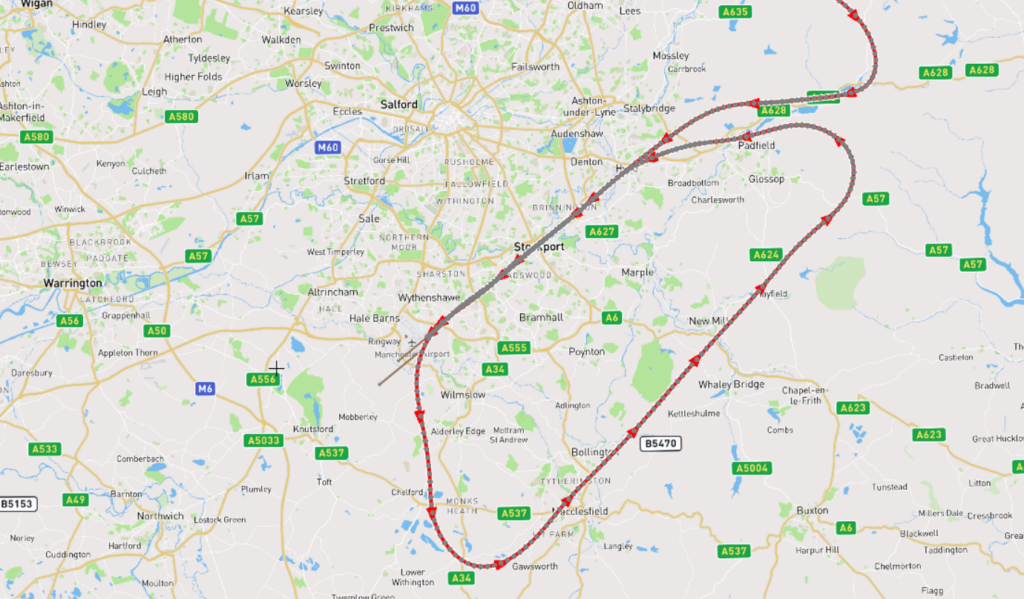
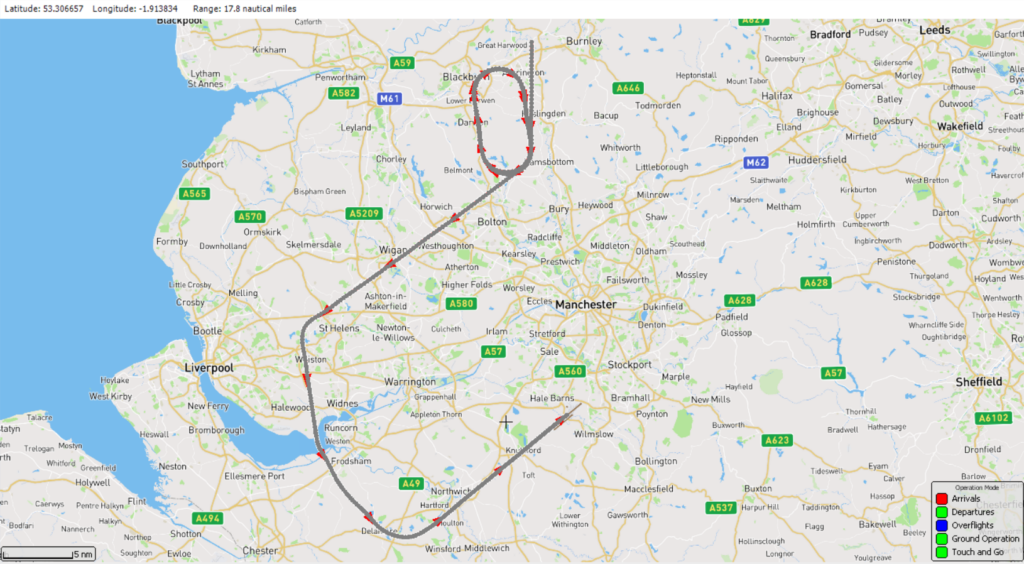
An example of an aircraft undertaking a go-around when arriving on Runway 23R is shown below. As you can see the aircraft was instructed to take a left turn and then vectored around to re-establish for a second, successful approach to Runway 23R:
You can find out more by watching this video:
Aircraft Holding
On occasion, often at busy times or during adverse weather, it will not be possible for aircraft to approach and land at Manchester Airport without having to be held for a short period of time. This takes place in fixed oval pattern known as a stack or hold.
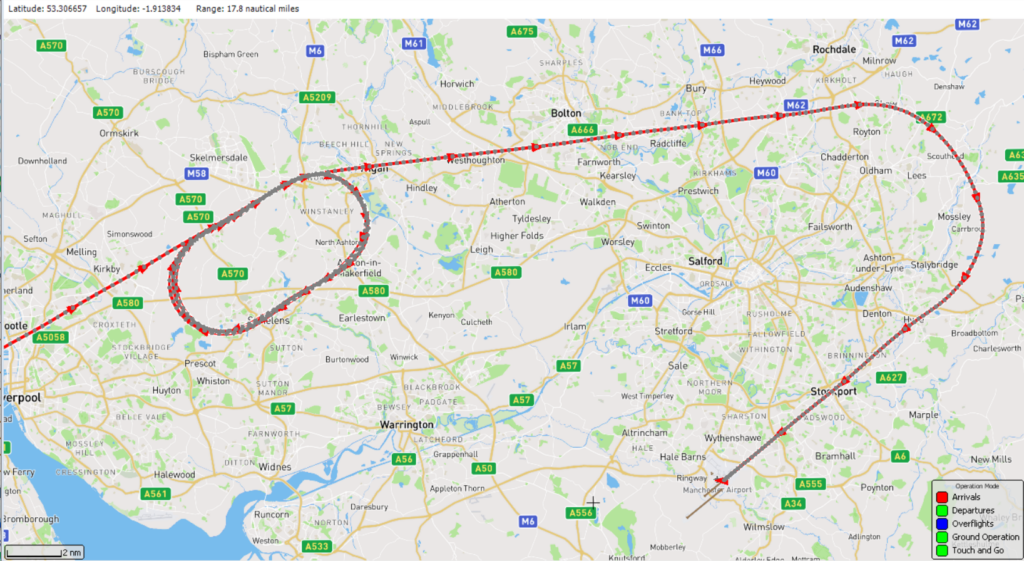
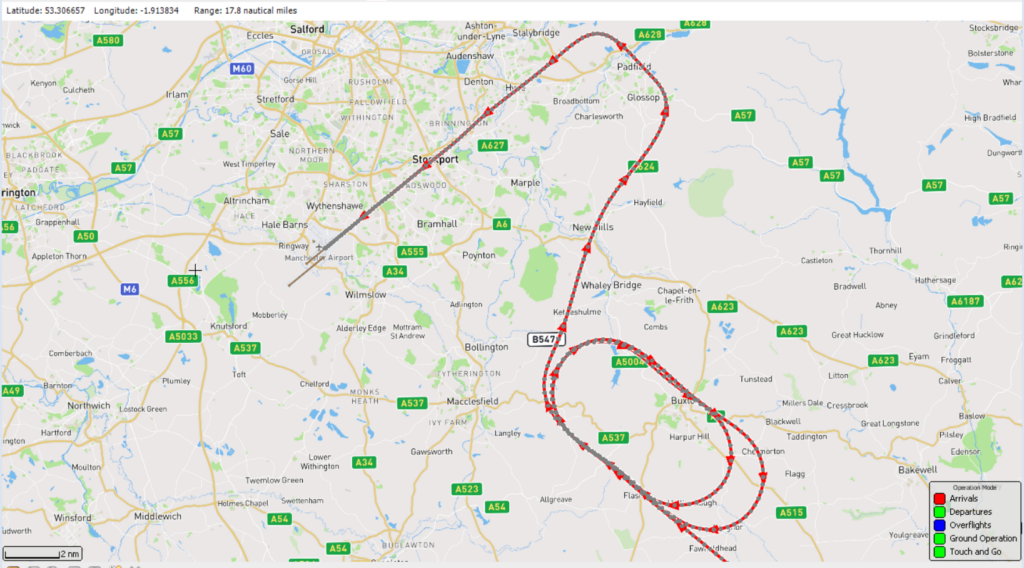
Manchester Airport has three holding stacks; one called ‘MIRSI’ which is located over Winstanley, north of St Helens and the second, ‘ROSUN’ is located South East of Blackburn and the third, ‘DAYNE’ is located over Harpur Hill .
Here is an example of an aircraft in the MIRSI holding area-
Here is an example of an aircraft in the ROSUN holding area-
Here is an example of an aircraft in the DAYNE holding area-
You can find out more by watching this video:
Helicopter Operations
Most helicopters operating at Manchester Airport operate under ‘Visual Flight Rules’ and do not fly the Noise Preferential Routes (NPRs) when departing as commercial jet aircraft do. Similarly, helicopters do not arrive in the usual patterns seen with commercial jet aircraft. The pilot navigates using “visual” ground-based features such as roads and rivers etc. Examples of helicopter operations include Air Ambulances as well as helicopter operators passing through Manchester Airport controlled airspace.
Non Standard Departures (NSD)
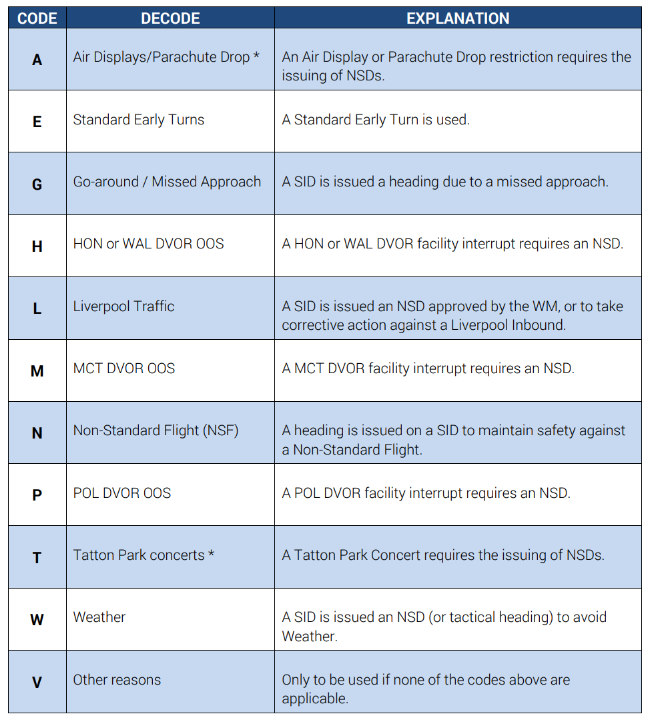
NSDs are special, alternative instructions given to aircraft by Air Traffic Control, which usually instruct an operator to fly outside the published noise preferential routes. These instructions are usually given prior to take off but can sometimes be given once the aircraft has left the runway. The reason for NSDs can vary as shown below, however NSDs will only be implemented when deemed necessary to maintain safe operations.
Possible reasons for NSDs: